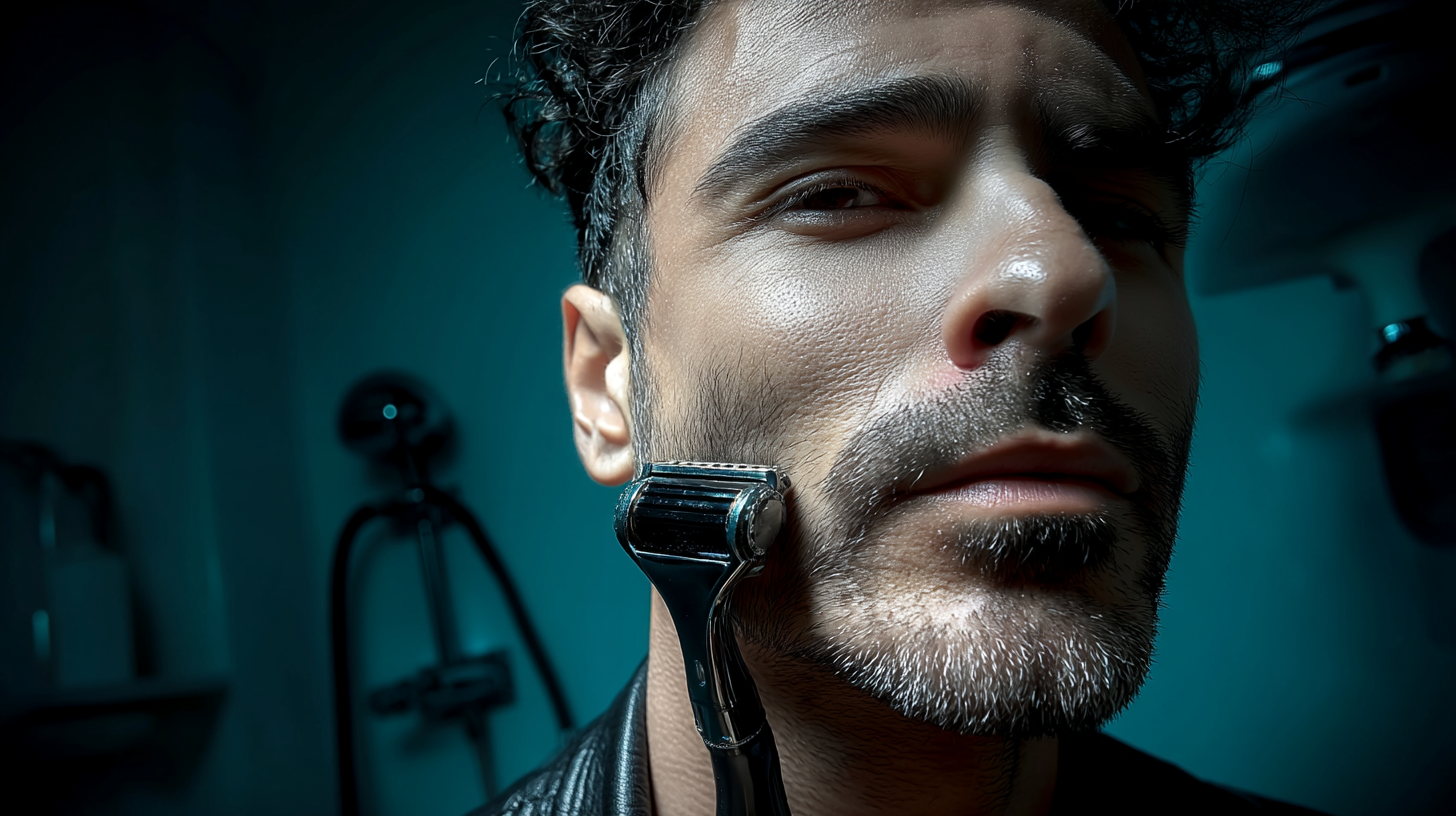


Mechanism: Controlled microtrauma, collagen induction, transdermal channel creation | Target: Stratum corneum barrier, dermal fibroblasts, extracellular matrix | Outcome: Enhanced ingredient penetration, visible texture refinement, sustained collagen remodeling
Executive Summary
Your skin is engineered to keep things out. The outermost barrier, the stratum corneum, blocks nearly 98% of what you apply topically. This is survival design. Without it, your body would lose water and let pathogens flood in. But when you're trying to deliver actives that actually work, that same barrier becomes the problem. Microneedling solves it by creating controlled micro-injuries that bypass the blockade entirely, opening temporary channels straight into the dermis where fibroblasts, collagen, and elastin live. The method is precise, the biology is well-mapped, and when executed correctly, it delivers measurable results that topical application alone cannot match.
Executive Highlights
- Microneedling at 0.25 to 0.5mm increases ingredient absorption by 200 to 300% through direct microchannel creation.
- Controlled microtrauma triggers a three-phase wound healing cascade that elevates collagen production by 400% at six months with repeated treatments.
- The 0.3mm depth zone offers full stratum corneum penetration, enhanced delivery, minimal downtime, and safe weekly use.
- Red light therapy at 630 to 850nm combined with microneedling accelerates healing by 30 to 50% and amplifies collagen synthesis through mitochondrial ATP production.
- GOA's waterless formulations and microencapsulation technology are engineered specifically for microchannel delivery, maximizing bioavailability during the 10 to 60 minute absorption window.
The 2% problem and why microneedling exists
Most skincare sits on the surface and does nothing. The stratum corneum, a 10 to 20 micrometer layer of dead, keratinized cells, is designed to resist penetration. It keeps water in and everything else out. Studies show that only about 2% of topically applied ingredients make it past this barrier under normal conditions. If you're applying a serum with peptides, growth factors, or high-molecular-weight hyaluronic acid, the active compounds are too large to cross. They evaporate, they oxidize, or they sit there doing nothing useful.
Microneedling changes the equation. By creating thousands of micro-channels through the stratum corneum and into the upper epidermis, it bypasses the barrier entirely. The channels remain open for 4 to 24 hours depending on depth, during which time ingredient absorption increases by 200 to 300%. Clinical studies using Franz diffusion cells and skin penetration assays have confirmed this repeatedly. What used to be blocked now has a direct pathway into the vascularized dermis where it can interact with fibroblasts, stimulate collagen synthesis, and deliver measurable biological effects.
The wound healing cascade: three phases, one outcome
Microneedling works because the skin interprets controlled injury as a signal to rebuild. The body doesn't distinguish between a calculated micro-injury and accidental damage. It just responds. That response is a three-phase wound healing cascade that has been studied exhaustively in dermatology and regenerative medicine.
Phase 1: Inflammation (0 to 3 days)
The moment the needle punctures the epidermis, platelets rush to the site and release a cocktail of growth factors: platelet-derived growth factor (PDGF), transforming growth factor-beta (TGF-β), fibroblast growth factor (FGF), and vascular endothelial growth factor (VEGF). These are the same signaling molecules that direct wound closure after surgery or trauma. Neutrophils arrive to clear debris. You see redness, mild swelling, and temporary warmth. This is not damage. It's activation.
Phase 2: Proliferation (3 to 14 days)
By day five, fibroblasts migrate to the injury site and begin laying down a fibronectin matrix. New blood vessels form through angiogenesis, delivering oxygen and nutrients. Collagen type III is deposited rapidly, creating initial structural support. Elastin synthesis accelerates. ATP production in mitochondria increases, which powers the entire repair process. This is when the biological machinery is running at full capacity.
Phase 3: Remodeling (14 days to 12 months)
The dermis repairs and reorganizes. Over weeks and months, the initial collagen type III is replaced by stronger, organized collagen type I. The lattice pattern becomes refined. Clinical studies show that four microneedling sessions spaced four to six weeks apart result in a 400% increase in collagen and elastin density at six months. The results continue to improve for up to a year after the final treatment, and they persist for five to seven years. This is durable, long-term structural remodeling.
What this means in practice
- Growth factors flood the injury site within minutes, triggering gene transcription for collagen, elastin, and glycosaminoglycans.
- Fibroblasts are reactivated from low-activity state, proliferating and synthesizing extracellular matrix components.
- Type III collagen appears first (days 5 to 14), then type I collagen replaces it over months, forming stronger lattice structure.
- Transepidermal water loss spikes 2 to 4 times baseline, then returns to normal within 24 to 72 hours.
- Long-term, the epidermis thickens and barrier resilience increases through lipid synthesis and tighter cell junctions.
Needle depth: the variable that changes everything
Not all microneedling is the same. Depth determines mechanism, risk, downtime, and outcome. Shallow needling focuses on absorption. Deep needling focuses on collagen induction. The difference matters.
0.1 to 0.25mm: Surface exfoliation
This range barely penetrates the stratum corneum. It removes dead cells and increases topical permeability slightly, but it doesn't create true microchannels or trigger wound healing. It's useful for product prep but not for structural change. You can use it daily with no real downtime, but don't expect collagen stimulation.
0.25 to 0.5mm: The absorption zone
At 0.25 to 0.5mm, the needles fully penetrate the stratum corneum and reach the upper epidermis. Studies on hair regrowth and transdermal drug delivery have shown that 0.25mm and 0.5mm depths produce strong outcomes for absorption-dependent results. The microchannels are clean, recovery is fast at 24 to 48 hours, and the collagen response is mild but present. You can repeat this weekly, which allows for consistent, cumulative benefits over time.
0.5 to 1.0mm: Collagen induction territory
At this depth, you're reaching the basal layer of the epidermis and triggering a robust wound healing response. Collagen synthesis increases significantly. Studies show 100 to 200% improvement with monthly treatments. This is the range most dermatologists use for anti-aging, acne scarring, and texture refinement. Downtime is three to seven days. Redness, mild swelling, and temporary sensitivity are expected. Frequency: once every three to four weeks.
1.0 to 2.5mm: Professional depth
Deep microneedling reaches the mid-to-lower dermis where collagen-producing fibroblasts are concentrated. It breaks down scar tissue, stimulates neocollagenesis to depths of 500 to 600 micrometers, and delivers dramatic structural change. Collagen increases by 300 to 400% at six months. But recovery takes seven to fourteen days, and the risk of hyperpigmentation, infection, and scarring increases if done incorrectly. This is professional-only territory. Frequency: once every six to eight weeks.
What this means in practice
- 0.3mm offers full stratum corneum penetration with minimal trauma, enabling 200 to 300% increased absorption.
- Recovery at 0.3mm is 24 to 48 hours, allowing weekly treatments that fit sustainable routines.
- Collagen response at 0.3mm is mild at 10 to 30% increase, sufficient for prevention and consistent stimulation.
- Deeper depths (1.0mm+) require professional expertise and longer recovery but deliver maximum structural remodeling.
- GOA's 0.3mm microneedle roller is engineered for this absorption-focused zone, optimizing waterless formulas through weekly microchannel delivery.
Red light therapy: the mitochondrial amplifier
Microneedling creates the wound. Red light therapy accelerates the repair. The two work through separate but complementary mechanisms, and when combined, they produce additive results.
Red and near-infrared light at wavelengths of 630 to 850 nanometers penetrate the dermis and are absorbed by cytochrome c oxidase in mitochondria. This increases ATP production, the energy currency that drives every cellular process, including collagen synthesis, protein folding, and membrane repair. Studies show that red light therapy after microneedling reduces erythema by 40%, accelerates healing by 30 to 50%, and boosts collagen production by an additional 150 to 200%.
The mechanism is simple. Microneedling triggers the wound healing cascade. Red light gives cells the energy to execute that cascade at peak efficiency. Fibroblasts work faster. Collagen deposition accelerates. Inflammation resolves quicker. The result is visible texture improvement in less time with reduced redness and discomfort.
What this means in practice
- Red light at 630nm stimulates keratinocyte proliferation and reduces surface inflammation.
- Near-infrared at 700 to 850nm penetrates deeper for collagen and elastin synthesis through mitochondrial ATP elevation.
- Immediate application after microneedling is safe and effective. Rinse, apply hyaluronic acid, then LED for 10 to 15 minutes.
- Device settings: minimum 30 mW/cm² irradiance at 6 to 12 inches from skin.
- Clean skin before LED. Oils interfere with light penetration. No makeup during session.
Product combination: the absorption window strategy
Timing is everything. The microchannels are open, but that doesn't mean you can apply everything immediately. The skin is vulnerable. If you apply strong actives too soon, you'll get stinging, irritation, and inflammation. If you wait too long, the window closes and you lose the benefit. The protocol matters.
0 to 10 minutes post-treatment
Apply only pure hyaluronic acid at high molecular weight. The channels are open but skin is vulnerable. HA provides hydration without stinging. It creates a reservoir that cushions the tissue. Avoid actives, acids, and retinoids during this window. They will cause pain and unnecessary inflammation.
10 to 60 minutes: optimal absorption window
This is when you apply your peptides, growth factors, and antioxidants. The microchannels are still open. Absorption is at peak efficiency. Studies show 200 to 300% enhanced penetration during this window. This is when GOA's waterless, microencapsulated formulas deliver their full payload. Matrixyl, argireline, copper peptides, niacinamide, and EGF all go in here. If you're going to invest in premium actives, this is when they earn their value.
Ingredients to avoid
Never use strong acids like glycolic, lactic, or salicylic for 48 to 72 hours after microneedling. They cause excessive irritation on open channels. High-strength retinoids are too aggressive immediately post-treatment. Alcohol-based products cause excessive drying and stinging. Essential oils and fragrances increase reaction risk. Physical exfoliants add unnecessary trauma.
Wait 24 to 48 hours before using vitamin C (ascorbic acid), benzoyl peroxide, or any product that tingles. Wait 3 to 7 days before reintroducing prescription retinoids, high percentage acids, or aggressive exfoliants. The goal is to let the wound healing cascade proceed without interference.
What this means in practice
- Hyaluronic acid goes on immediately (0 to 10 minutes) to hydrate and cushion vulnerable tissue.
- Peptides, growth factors, and niacinamide apply during the 10 to 60 minute window when absorption peaks.
- Maintain hydration with gentle moisturizers for 1 to 24 hours. Avoid makeup, fragrances, harsh ingredients.
- Resume gentle actives at 24 to 72 hours. Avoid strong acids and high-strength retinoids.
- Gradual reintroduction of full routine at 3 to 7 days. Monitor for sensitivity. Optimal time for next shallow treatment.
GOA skincare engineering: 0.3mm surface absorption focus
GOA has engineered their entire system around the 0.3mm microneedle roller as the cornerstone of enhanced delivery. The logic is simple. Consistency beats intensity. Regular shallow treatments outperform occasional deep treatments for product-dependent results. The 2% topical penetration problem makes high-concentration formulas useless without a delivery mechanism. Weekly 0.3mm treatment fits modern schedules. The risk-reward ratio is favorable: 0.3mm provides substantial absorption benefits with minimal downtime and no real risk.
Technical specifications: GOA microneedle roller 0.3mm
Needle length: 0.3mm (300 micrometers). Target: stratum corneum plus upper epidermis penetration. Microchannel depth: fully penetrates 10 to 20μm SC, reaches 50+ μm into epidermis. Safety profile: minimal trauma, no bleeding expected. Usage protocol: 1 to 3 times weekly depending on skin sensitivity.
Performance metrics: absorption enhancement of 200 to 300% versus topical application alone. Downtime: 24 to 48 hours. Collagen response: mild stimulation at 10 to 30% increase, sufficient for prevention. Product synergy: optimizes their waterless, high-concentration formulas.
What this means in practice
- Purifying Cleanser removes debris and pollutants, preparing pores for optimal needling.
- Microneedle Roller 0.3mm creates microchannels, opens absorption pathways, provides mild collagen signaling in 5 to 10 minutes.
- Collagen and Control Facial Serum applies immediately after needling during the 10 to 60 minute absorption window.
- Contains microencapsulated retinol, peptide complexes, hyaluronic acid (multiple molecular weights), niacinamide, and Dark Phyto Matter.
- Microchannels allow full penetration into dermis where fibroblasts respond. Without microchannels, most would sit on surface.
How do I use microneedling for delivery
The GOA protocol is weekly at 0.3mm. Sunday: cleanse, microneedle, apply hyaluronic acid, red light therapy for 10 to 15 minutes, peptide serum, gentle moisturizer, no makeup for 24 hours. Monday to Tuesday: gentle cleanser only, hyaluronic acid morning, light moisturizer, SPF 50+ mandatory, avoid actives. Wednesday to Saturday: normal skincare routine, reintroduce vitamin C on Wednesday, low-strength retinoids on Thursday, continue SPF protection. Sunday: repeat microneedling.
Weekly protocol
- Microneedling (0.3mm): Opens micro-channels for deeper delivery once weekly.
- Red-Light Therapy: Red and NIR at 630 to 850nm boost mitochondrial energy and collagen immediately after needling.
- Peptide and Growth Factor Serums: Apply during 10 to 60 minute window when absorption peaks at 200 to 300%.
What this means in practice
- Microneedling at 0.3mm bypasses the skin's primary barrier and creates direct pathways for ingredient delivery.
- Red light therapy at 630 to 850nm accelerates healing and amplifies collagen synthesis through mitochondrial ATP production.
- GOA's waterless, microencapsulated formulations maximize bioavailability during the absorption window when microchannels are open.
- Consistent weekly execution over 8 to 12 weeks produces measurable results: improved hydration, refined texture, visible firmness.
- Sustained collagen remodeling continues for months after the last session, with results persisting for five to seven years.
FAQs
- Why does microneedling work when topical application doesn't? The stratum corneum blocks 98% of ingredients. Microneedling creates microchannels that bypass this barrier, increasing absorption by 200 to 300%.
- What depth should I use for product delivery? 0.25 to 0.5mm fully penetrates the stratum corneum with minimal trauma. 0.3mm is optimal for weekly use with fast recovery.
- How does red light therapy amplify microneedling? Red and NIR at 630 to 850nm increase mitochondrial ATP, accelerating healing by 30 to 50% and boosting collagen by 150 to 200%.
- When should I apply serums after microneedling? Hyaluronic acid immediately (0 to 10 minutes). Peptides and actives during the 10 to 60 minute window when absorption peaks.
- How often can I microneedle at 0.3mm? Once to three times weekly. GOA protocol is once weekly for consistent, sustainable results with minimal downtime.
Citations
- Aust MC, Fernandes D, Kolokythas P, et al. Percutaneous collagen induction therapy: an alternative treatment for scars, wrinkles, and skin laxity. Plast Reconstr Surg. 2008;121(4):1421-1429. PubMed Link
- Dhurat R, Sukesh MS, Avhad G, et al. A randomized evaluator blinded study of effect of microneedling in androgenetic alopecia: a pilot study. Int J Trichology. 2013;5(1):6-11. PubMed Link
- Wunsch A, Matuschka K. A controlled trial to determine the efficacy of red and near-infrared light treatment in patient satisfaction, reduction of fine lines, wrinkles, skin roughness, and intradermal collagen density increase. Photomed Laser Surg. 2014;32(2):93-100. PubMed Link
- Fernandes D, Signorini M. Combating photoaging with percutaneous collagen induction. Clin Dermatol. 2008;26(2):192-199. PubMed Link